BUENA VISTA SOCIAL CLUB SELF-TITLED: FROM ALTO CEDRO TO MARCANÉ
Stumbling into Havana
After Tool, I’m going in a totally different direction, but this album and I go way back… like, way back. I was probably 11 or 12, spending the summer with my family at our little motel we were running that season. They would ALWAYS play "Chan Chan," like, nonstop.
Of course, I had no idea what the song was called back then, but I’d sing along all the time, making up random Spanish words that didn’t mean anything at all lol. If you know the song, you get it; there’s just something about it that pulls you in. It’s not about being technical or having some deep meaning; it just makes me feel happy. It’s warm, the melody is catchy, and the way the lyrics repeat makes you wanna sing along, even if you’re just catching random words and going for it.
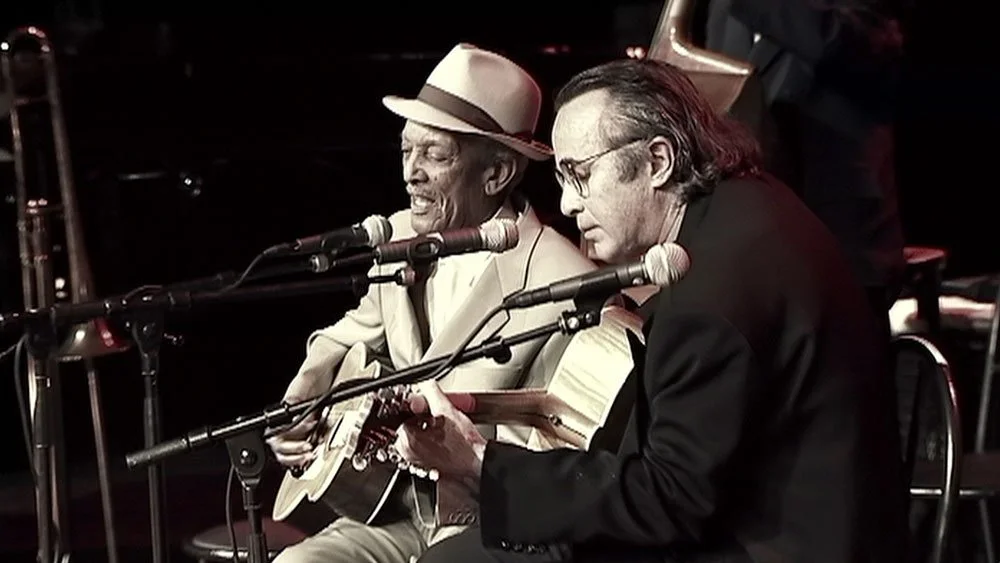
Compay Segundo (left) and Ry Cooder (right) performing together
That’s exactly what Buena Vista Social Club is about. It feels warm and effortless, but not because it’s simple, more like they’re just doing what they do best, and it feels totally human and spontaneous. These people are real artists at heart.
The album stuck with me forever. I’d play “Candela” or “El Carretero” in the background while studying for exams in middle school and high school, and somehow I even picked up a couple of Spanish words from the songs. Now I’ve basically memorized the songs, but I still can’t believe I can recite them word for word. It also gave me a real interest in Cuban music and culture, and Latin America in general. This album basically started everything for me, and now I have a whole playlist full of Son Cubano, Bolero, Guajira, and other kinds of Cuban and Latin music from different artists.
So I guess this is my way of paying homage to the album that started it all, because there’s a lot more going on here than it seems.
From Retired Musicians to a World Album
This is a tricky one to explain because they weren’t formed in a traditional band sense. So I think it makes more sense to talk about them as a project to bring back the old sound of Cuba, rather than just calling Buena Vista Social Club a band.
The project started with Ry Cooder, an American musician and composer, who wanted to bring together veteran Cuban singers and revive the traditional Cuban Son sound. I read that he originally planned to do a similar project in Africa first, but there were issues with the musicians' visas, so that didn’t happen, and he ended up in Cuba instead. He started bringing together older musicians who were mainly active in the 1950s. Most of them were semi-retired, maybe even forgotten locally, but still incredibly talented, and their sound was deeply rooted in the traditional Cuban sound. Those musicians ended up recording together in Havana at EGREM studios. From what I understand, the sessions were very lively and organic, which is why the result doesn’t feel overly planned or polished. It was more like putting these musicians in a room and doing a live ensemble recording without overdubbing it, the way they used to in their active years.
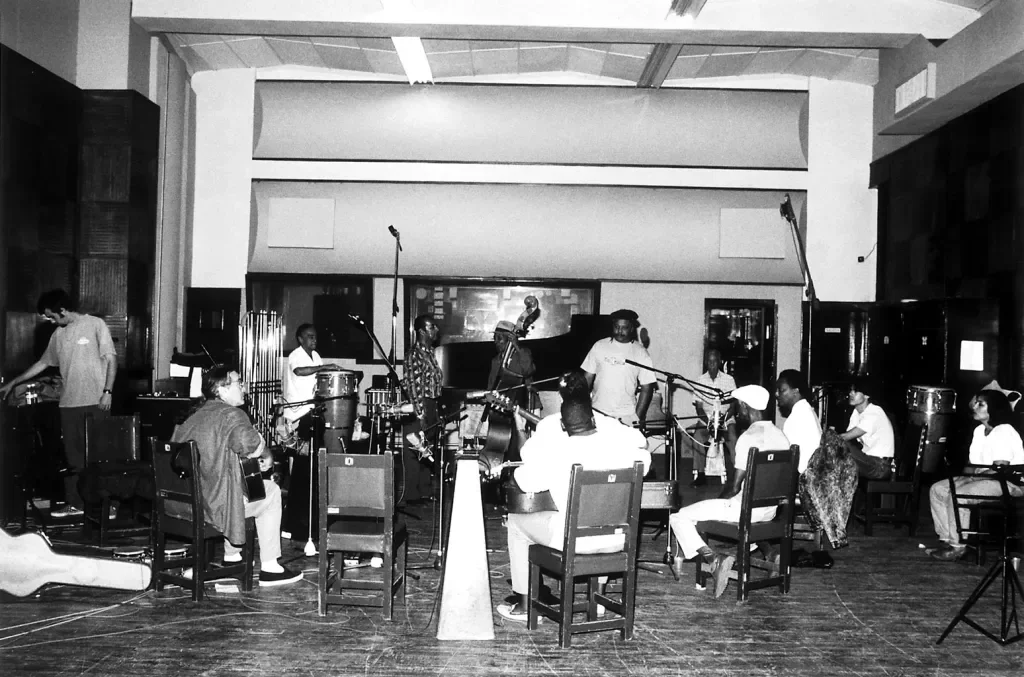
EGREM Studios
And I think that’s exactly why it works so well. You can hear that it’s not over-produced or heavily controlled; it just feels natural.
Some of the members include true legends, and off the top of my head, I think of Omara Portuondo with her bolero influence and emotional voice, Compay Segundo with his distinctive guitar style and composing, and Ibrahim Ferrer, I’d say, is one of the most recognizable voices of the project. Oh, and not to forget Rubén González on piano… His playing feels so natural and expressive, and is full of montuno patterns. If you noticed and liked his playing in Buena Vista Social Club, I really recommend his solo album Introducing… Rubén González; his work in Mandinga and Cumbanchero is honestly perfect.
In some songs, you can literally hear the musicians reacting to each other; shouting, calling back, loose notes here and there, even a guitar string breaking. I’ll go deeper into these later when I talk about some of the individual tracks on the album.
This album’s song reviews will be very different from my Tool one, because it really asks you to stay in the moment rather than get lost in technical details or structure. With an album like Lateralus, you can’t help but notice those details, and it pulls you into them. Here, there is not much point in overanalyzing it that way. It is more about how it feels as it unfolds.
Moments Inside the Album / KEY TRACKS
Chan Chan
As I mentioned before, I have a lot of memories tied to this album, from the first time I heard it to now. It always feels deeply emotional to me, even though I only recently looked up the translation of "Chan Chan". I used to listen to it on my middle school bus rides at 8 a.m., looking out at the city because I was always picked up first. I would loop this song over and over again (along with Queen’s Bohemian Rhapsody) until I got to school, completely lost in it.
But beyond my own memories, the song itself is really something special. It was written by Compay Segundo himself, who apparently came up with the main guitar melody in his dream. This twangy guitar we hear on the intro is an Armónico, something he also invented himself. A hybrid between Tres, a Cuban guitar with three pairs of strings, which gives the melody a bright, ringing edge that we can't get from a standard acoustic, and a classical Spanish guitar. The lyrics, inspired by a farmer’s tale with two characters, Juanica and Chan Chan, repeat in a way that doesn’t really tell a strict story. Instead, the way Compay Segundo delivers them feels like storytelling, or at least it brings out their emotion. The vocals are so intertwined with the instruments that when he sings, the instruments make space for the words and then come back in, connecting them to the main melody. Since it’s rooted in son cubano, the rhythm and the interaction between vocals and instruments make perfect sense. The call-and-response feel, so common in Afro-Cuban music, makes the listener feel included, like you are right there in the recording room with them.
This song, whether you’re listening to it for the first time or not, already feels familiar and timeless, like you’ve heard the melody somewhere before but can’t quite place it. At least it felt like that for me. It’s not really upbeat at all; it’s warm in an emotional way, with a quiet melancholy underneath that just kind of sways you; a perfect start to what feels like a perfect album.
Live version of Chan Chan - Carnegie Hall
“I didn’t compose Chan Chan, I dreamt it. I dream of music. I sometimes wake up with a melody in my head, I hear the instruments, all very clear. I look over the balcony and I see nobody, but I hear it as if it was played on the street. I don’t know what it can be. One day I woke up hearing those four sensitive notes, I gave them a lyric inspired by a children’s tale from my childhood, Juanica y Chan Chan, and you see, now it’s sung everywhere.”
El Cuarto de Tula
The first two songs on the album, “Chan Chan” and “De Camino a la Vera”, are soft and warm, setting a calm tone. Then El Cuarto de Tula takes over and completely shifts the energy. It feels so alive, and the interactions within the band become much more prominent than in the earlier tracks, especially in the live versions. I can definitely say this is the main dance song on the album.
“El Cuarto de Tula” is the perfect place to talk about the Clave. You’ll sometimes hear it as those two wooden sticks clicking in the background, but it’s more of a feeling than a sound. It’s the heartbeat of the studio in Cuban music, and if you’re off the Clave, the whole song will fall apart. The whole Clave rhythm changes the mood of the song instantly. When the band is leaning into that classic, elegant Son vibe, you’ll usually feel a 2-3 pulse holding everything steady. Here though it leans into a heavy 3-2 rhythm that’s much closer to a street-party Rumba Clave.
El Cuarto de Tula, translated as “Tula’s room,” is about her room catching fire. I’m not sure if they mean this literally or if there’s some kind of double meaning, but the way the lyrics play with the situation makes it feel both chaotic and almost funny at the same time. It’s a fast-paced song, so I wasn’t expecting any emotional situation in the lyrics. I thought maybe it's some sort of a celebration song, but the literal translation still surprised me, kinda. They repeat the names of the musicians reacting to the situation, and now that I think about it, if it were a slower song, it would actually feel like a very tragic situation. But it comes across as lively and energetic.
It feels like the perfect example of call-and-response in action. In some versions, they sing “Échale agua, échale agua, mira cómo corre” (“Throw water on it, throw water on it, look how it spreads”), and the instruments seem to respond as well.
One thing I wanted to mention is something I saw someone point out in a forum. They mentioned that the guitar melody from 5:36 to 5:44 feels somewhat similar to the guitar solo in Metallica’s One at around the 6:00 mark. I’m not sure if there is actually any connection or if it is just a coincidence, but there is a slight similarity between the melodies.
It is so interesting how different the feeling of these similar melodic parts can be. In El Cuarto de Tula, it feels looser, more upbeat, and more rhythmic. In One, though, it feels much more controlled and tense, slowly building intensity.
Veinte Años
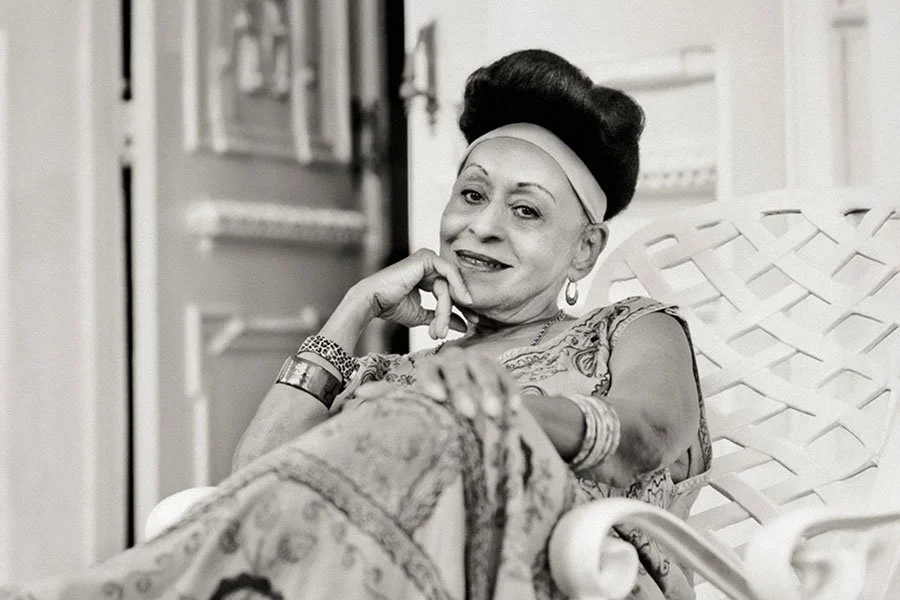
Omara Portuondo
I couldn’t not mention this song because I’m such a fan of Omara Portuondo. Besides her work on this album, some of her other songs, like “No me llores más” and “La Sitiera”, are also in my playlists.
The song feels really intimate, especially when you think about the lyrics and the slow, romantic bolero rhythm. A musical style that emphasizes emotion and is typically performed expressively. The title literally means “twenty years,” and it’s about the time passing between two people. But it doesn’t really feel like it’s just about time, but more so, the love between them stays. The lyrics are of two lovers complaining to one another.
The harmony between Omara Portuondo’s and Compay Segundo’s voices blends so beautifully. Omara carries the main voice, while Compay comes in underneath with lower-register background vocals that sit nicely in the mix. It actually fits him really well, considering that's how he got his nickname “Compay,” which means “buddy,” and he was always known for taking that supporting harmony vocal role in his earlier work, too. And I’m telling you, he has the perfect voice for this role. It has this really deep timbre, earthy in a way. I’ve even seen it described as “rustic.”
Their voices just fit together so effortlessly, and it really brings out the song's emotion. You can feel the love, the intimacy, and that longing all at once. It gets the feeling across to the listener.
Finally… We Reach Mayarí
Finally, we arrive in Mayarí. After experiencing the various moods on the album, you're left with a lasting feeling. Even when it ends, it doesn’t really feel like it’s over; it stays with you. So what you can do best is: lose yourself in the music, hear the guitar strings break in the intro of Y Tú Qué Has Hecho, dance to Candela, and imagine yourself in Cuba. Hats off to these legends. Cuba really has every reason to be proud of them; the music they created still feels alive, even now.
